Osteoarthritis (OA) is a degenerative joint condition that affects approximately 27 million Americans. Current diagnostic modalities are inadequate, as they cannot identify degeneration until severe damage has been done. This limits the use of early treatments to slow disease progression and leaves only aggressive treatments, such as joint arthroplasty, as viable options. Additionally, cartilage has a very limited ability to self-repair, necessitating novel stem cell-based techniques for the regeneration of functional neo-cartilage. Our lab is interested both in early diagnosis of OA and engineering cartilage for regenerative purposes.
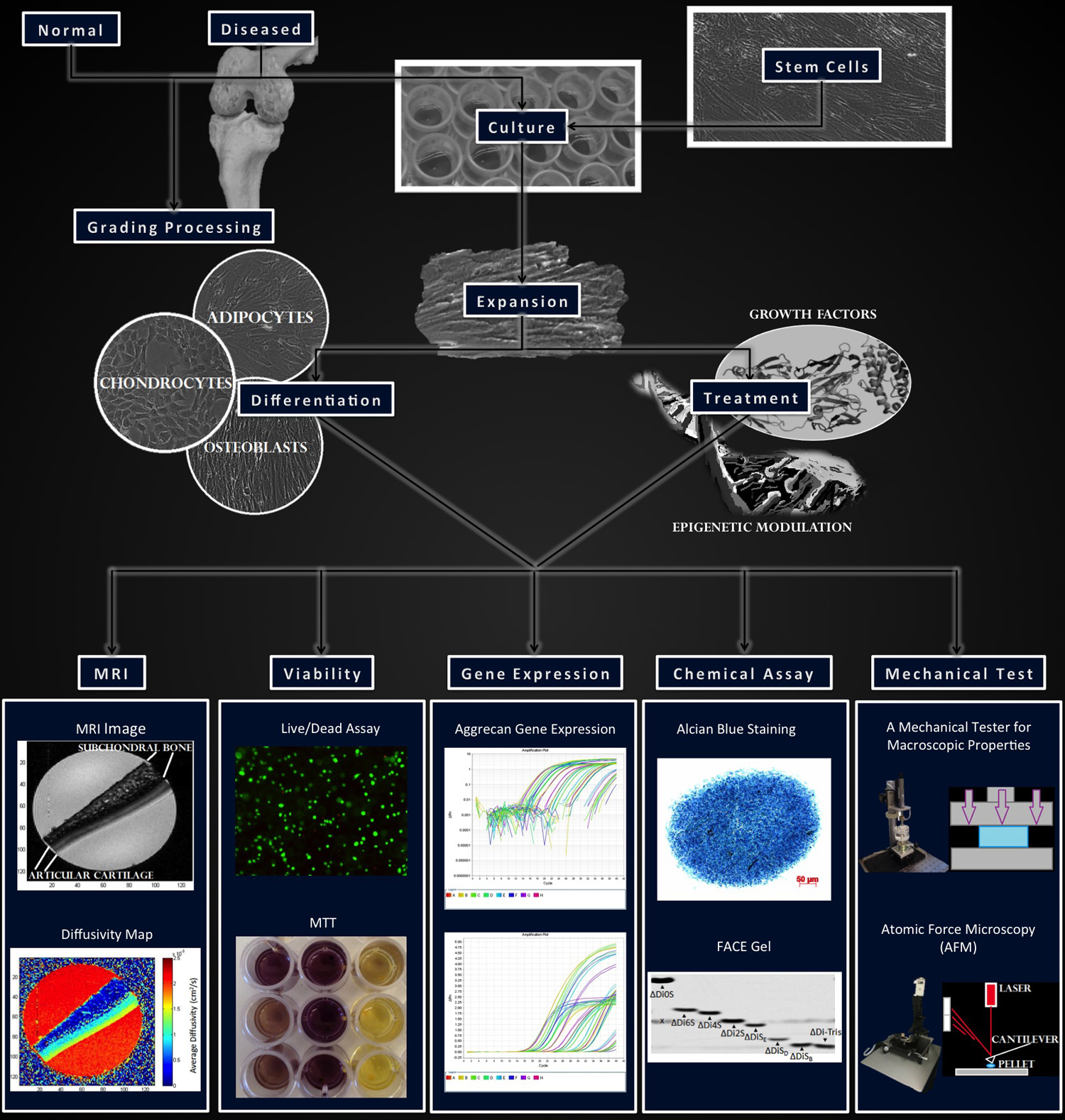
Using a broad array of techniques including imaging, mechanical testing, and biochemical assays, our research focuses on characterizing differences in healthy, diseased, and engineered articular cartilage. Research on normal and diseased cartilage and chondrocytes provides deep insight on genetic and epigenetic mechanisms associated with OA pathology, and serve as a guideline for stem cell based cartilage repair. Changes in anabolic (collagen and glycosaminoglycan production) and catabolic (matrix degradation or remodeling) molecular interplay in normal and OA cartilage can lead to alterations in tissue structure and function. Cellular responses to differential molecular treatments using our high throughput methods will provide insight on the disease-modifying capabilities of potential drugs on native chondrocytes and implanted stem cells. Our findings will aid in the development of stem cell based methods for modeling cartilage in development and disease.